Plants & animals
Lichen
Mycology · Symbiosis
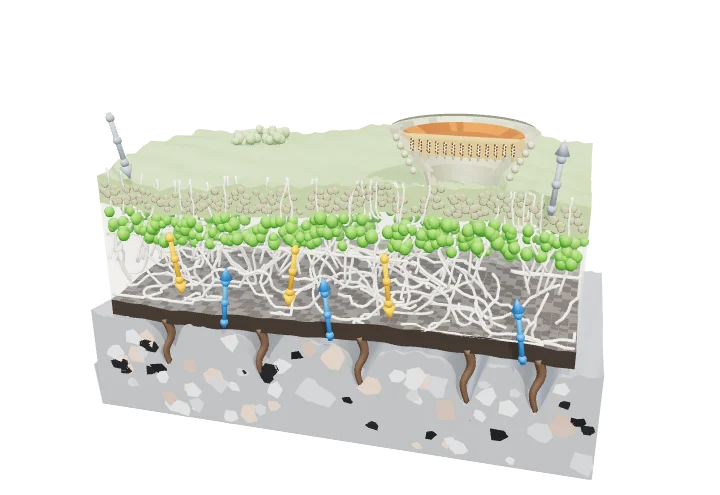 Open the interactive 3D model →
How can something live on bare rock, with no soil and no roots, for hundreds of years?
A lichen is not one living thing but two working as a team: a fungus and a tiny green alga. The fungus builds a tough, layered home and catches water, and the alga living inside uses sunlight to make sugar that it shares. When the lichen dries out it simply switches off, and when rain comes it switches back on within minutes.
A lichen is a stable symbiosis in which a fungus builds a layered body (thallus) that houses a population of green algae or cyanobacteria, which supply it with sugars from photosynthesis. Because lichens cannot control their water content, they switch between dry dormancy and active metabolism as they dry out and rehydrate, which lets them colonise bare rock, bark and other harsh surfaces.
Key facts
- Partners
- Mycobiont (fungus, mostly Ascomycota) + photobiont (green alga or cyanobacterium)
- Described species
- ≈ 20,000
- Thallus thickness (foliose)
- ≈ 100–300 µm
- Common photobiont
- Trebouxia (green alga), cells ≈ 10–20 µm
- Water content when saturated
- ≈ 100–300% of dry mass
- Growth rate
- Often ≈ 0.5–5 mm in radius per year (foliose lichens)
Parts you can explore (10)
- Upper cortex
- Photobiont layer
- Medulla
- Lower cortex
- Fungal hyphae
- Rhizines
- Rock substrate
- Apothecium
- Soredia
- Symbiosis exchange
In the 3D model
Rotate and take apart the model, follow a guided tour of what each part does and why it’s needed, change it with a live slider, and test yourself with a short quiz. Free, no sign-up.
OpenArc Models’ models are simplified teaching schematics. Terms · Privacy